
A Gentle Bond That Supports Regulation, Connection, and Growth
Therapy dogs can play a powerful role in supporting children with autism by offering calm, connection, and unconditional acceptance. For many children, traditional therapy environments can feel overwhelming. A therapy dog provides a steady, nonjudgmental presence that helps children feel safe, regulated, and ready to engage.
Rather than relying on words or expectations, therapy dogs connect through consistency, gentle interaction, and companionship—often becoming a bridge to emotional regulation, communication, and meaningful participation.
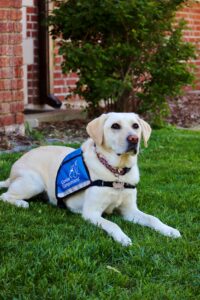
What Is a Canine Companions® Facility Dog?
A Canine Companions® Facility Dog is a highly trained dog that works alongside a professional—such as an occupational therapist, educator, or healthcare provider—to support multiple children or individuals within therapeutic or educational settings.
Unlike service dogs, which are trained to assist one specific person, facility dogs are part of a care team and provide support to many children. They commonly work in:
- Hospitals
- Pediatric clinics and therapy practices
- Schools
- Mental health and community programs
At ROC OTx Pediatric Occupational Therapy, Sunflower is a Canine Companions Facility Dog who works alongside occupational therapists to support children during therapy sessions. Sunflower helps create a calm, welcoming environment that supports regulation, engagement, and emotional safety.
How Therapy Dogs Support Children With Autism
Emotional Regulation and Reduced Anxiety
Many children with autism experience heightened anxiety, stress, or emotional overwhelm. Therapy dogs help regulate the nervous system through their calm presence and predictable interactions. Sitting beside a child, offering quiet companionship, or allowing gentle interaction can reduce stress, lower arousal, and create a sense of safety.
Over time, children often begin to associate therapy with comfort rather than challenge, increasing participation and tolerance for therapeutic activities.
Social and Communication Development
Therapy dogs create a low-pressure environment for communication. Children may talk to the dog, give simple commands, or engage through gestures, eye contact, and shared attention. Because dogs respond without judgment, children often feel more confident practicing both verbal and nonverbal communication.
Therapy dogs also create natural opportunities to practice social skills such as turn-taking, empathy, and awareness of others. Children learn to read the dog’s cues, respect boundaries, and notice how the dog responds to gentle versus rough touch—skills that can later generalize to interactions with peers and adults.
Sensory Support
Many children with autism experience sensory processing differences. Therapy dogs offer adaptable, calming sensory input that can be matched to each child’s individual sensory needs.
The warmth of a dog’s body, rhythmic motion of petting, quiet proximity, or gentle weight resting nearby can provide organizing sensory input that helps children feel grounded and regulated. For children who seek sensory input, the steady pressure and predictable presence of a therapy dog can be deeply calming. For children who are sensory-sensitive, interactions can be carefully graded—ranging from simply being in the same space to brief, supported touch.
Unlike artificial sensory tools, therapy dogs respond intuitively, making interactions feel organic and soothing rather than clinical. At ROC OTx, sensory input from Sunflower—including calming presence, tactile input, and gentle deep pressure—is intentionally incorporated to support regulation, focus, and readiness for learning.
Increased Engagement in Therapy
In clinical settings, therapy dogs often increase motivation and participation. Children may be more willing to try challenging tasks, tolerate transitions, or remain engaged when a trusted therapy dog is part of the session. The dog may serve as a calming support, a motivator, or a meaningful reward for effort and engagement.
Therapy Dogs in Clinical and Educational Settings
Therapy and facility dogs are increasingly integrated into hospitals, schools, and pediatric therapy clinics. When guided by trained professionals, interactions with therapy dogs are safe, purposeful, and aligned with therapeutic goals.
At ROC OTx, Sunflower supports children during occupational therapy by helping their bodies and brains feel regulated, calm, and ready to learn.
Final Thoughts
Therapy dogs—and especially Canine Companions® Facility Dogs—offer meaningful support to children with autism. Through calm presence, sensory support, consistency, and compassionate connection, they help children build regulation, communication, and confidence in a way that feels natural and joyful.
Sometimes, a gentle paw truly can open the door to growth. 🐾💛