
Starting occupational therapy can bring up a lot of questions for parents.
You might be wondering:
“What will they do with my child?”
“Will my child be comfortable?”
“What should I expect?”
At ROC OTx, we want your child’s first session to feel supportive, low-pressure, and even enjoyable—not intimidating.
Because the first session isn’t just about evaluation. It’s about understanding your child, building a connection, and creating a plan that truly fits your family.
What to Expect Before the First OT Session
The first OT session actually begins before you ever meet your therapist.
Preparation helps ensure that your child’s time in therapy is meaningful and tailored from the very start.
Before your visit, you can expect:
- Intake paperwork about your child’s medical history, development, and daily routines
- Questions about your concerns, priorities, and goals
- Initial communication with your therapist to begin understanding your child
How to prepare your child:
- Keep it simple: “We’re going to play and meet a new friend”
- Avoid over-explaining or creating pressure
- Bring a comfort item if helpful (favorite toy, snack, etc.)
At ROC OTx, we prioritize making children feel safe and comfortable from the very beginning.
Step 1: Intake and Parent Discussion
The session often begins with a conversation between you and the therapist.
This is one of the most important parts of the entire process.
We want to understand:
- What your child’s daily life looks like
- Where things feel easy and where they feel hard
- What concerns you most as a parent
- What your goals are for your child
This might include challenges with:
- Sensory processing or regulation
- Transitions and behavior
- Feeding or sleep
- Fine motor or play skills
- Daily routines like dressing or bathing
At ROC OTx, we see parents as essential members of the team. Your insights help guide everything we do.
This is also where trust begins to build, because therapy works best when families feel heard, supported, and understood.
Step 2: Child Observation and Initial Interaction
While we talk, your child is already showing us so much.
We begin by observing how your child:
- Moves and explores their environment
- Interacts with toys and materials
- Responds to a new space and new person
- Regulates their body and emotions
We often use simple, engaging activities to connect, such as:
- Play-based exploration
- Movement activities
- Cause-and-effect toys
- Sensory materials
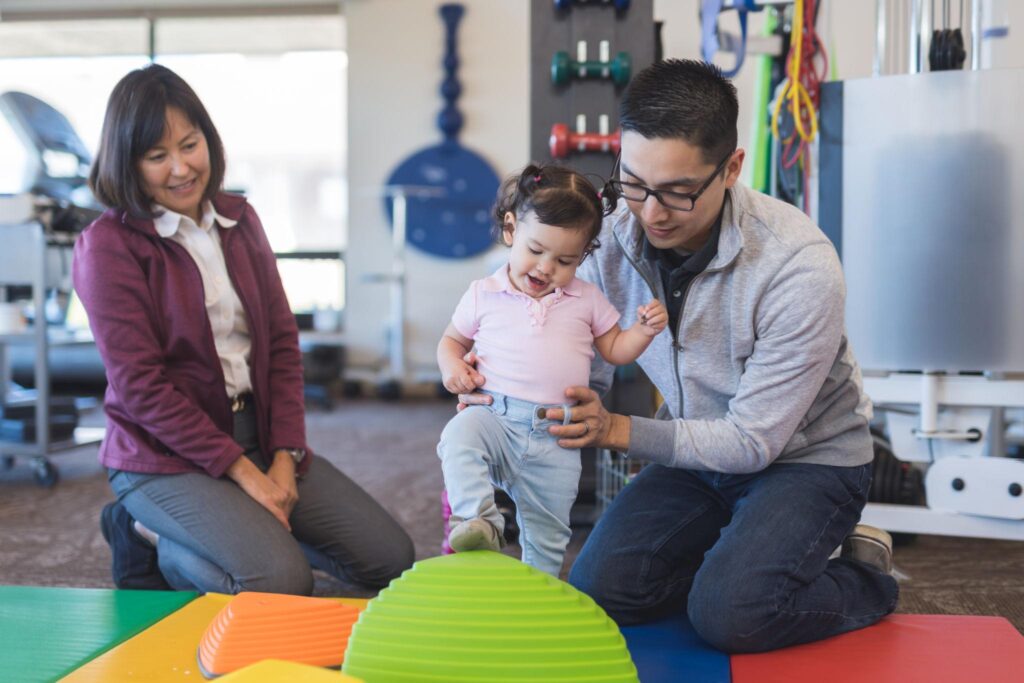
At this stage, the focus is not on testing.
It is on building rapport, helping your child feel safe, and understanding their natural patterns of play and behavior.
Children do their best when they feel comfortable, and that is always our priority.
Step 3: Assessment of Skills and Abilities
As your child becomes more comfortable, we begin to gently assess their skills.
This may include a combination of structured and play-based activities to look at:
- Fine motor skills (grasping, manipulating objects, early writing skills)
- Visual-motor integration (how the eyes and hands work together)
- Gross motor coordination and body awareness
- Sensory processing and regulation
- Attention, engagement, and transitions
- Daily living skills (feeding, dressing, play routines)
Depending on your child, we may use:
- Standardized assessment tools
- Clinical observation
- Functional play-based tasks
At ROC OTx, we are always watching for both strengths and areas of challenge. Understanding what your child can do is just as important as understanding what is difficult.
Step 4: Goal Setting and Therapy Planning
After we gather information, we begin to put the pieces together.
You can expect:
- Clear, parent-friendly explanations of what we observed
- A discussion of how your child’s skills are impacting daily life
- Collaboration to identify meaningful, realistic goals
Goals are never one-size-fits-all.
They are based on your child’s needs, your family’s priorities, and real-life routines and challenges.
We will also discuss:
- Recommended frequency of therapy
- Type of sessions (home, clinic, community-based)
- Initial strategies or supports
At ROC OTx, our goal is not just to create a plan. It is to create a plan that actually works in your everyday life.
Step 5: What Happens After the First Session
After the evaluation, you will leave with a clear sense of next steps.
This may include:
- Verbal feedback and initial impressions
- A written evaluation report (if applicable)
- Recommendations for ongoing therapy
- Simple strategies you can begin using at home
You may also:
- Schedule ongoing sessions
- Begin working on early goals right away
- Stay in communication with your therapist as questions come up
At ROC OTx, we prioritize ongoing communication and collaboration so you never feel unsure about what is happening in therapy.
Conclusion
The first OT session is a structured but child-friendly process focused on understanding your child and building a meaningful therapy plan.
More importantly, it is the beginning of a relationship—one built on trust, collaboration, and support.
Every child moves at their own pace. With the right guidance, even small steps forward can lead to meaningful, lasting progress.
At ROC OTx, we meet your child exactly where they are and help them build the skills they need to feel more confident, capable, and successful in their everyday life.
FAQs
Most initial sessions last between 60–90 minutes, depending on the setting and your child’s needs.
In most cases, yes. Parent involvement is encouraged, especially during the first session, as it helps provide insight and supports collaboration.
Both. Therapists use a combination of observation, play-based interaction, and sometimes structured assessments to understand your child.
Progress varies for every child, but many families begin to notice small changes within the first few weeks, especially with consistent therapy and carryover at home.
Comfort items can be helpful, such as a favorite toy, snack, or drink.
Otherwise, just bring your child as they are.