
Every child grows and develops at their own pace. While some children naturally master daily tasks, others may need extra support to build the skills required for success at home, school, and in social settings.
A Pediatric Occupational Therapist helps children overcome developmental challenges and gain independence in everyday activities. Through personalized interventions, occupational therapy supports physical, emotional, sensory, and cognitive development.
Parents often seek occupational therapy when they notice difficulties with movement, attention, self-care, or social participation. Early intervention can make a significant difference in helping children reach important developmental milestones.
In this guide, you’ll learn what pediatric occupational therapy involves, when it may be beneficial, and how it can support your child’s long-term growth and confidence.
What Is a Pediatric Occupational Therapist?
A pediatric occupational therapist is a healthcare professional who helps children develop the skills needed to participate successfully in everyday life.
Occupational therapy focuses on improving a child’s ability to perform activities that are meaningful and necessary for daily functioning. These activities may include eating, dressing, writing, playing, learning, and interacting with others.
Unlike therapies that focus solely on physical movement, pediatric occupational therapy addresses a wide range of developmental areas, including:
- Fine motor skills
- Gross motor skills
- Sensory processing
- Visual perception
- Attention and focus
- Emotional regulation
- Social interaction
- Self-care abilities
The goal is to help children become as independent and confident as possible in their daily routines.
Where Do Pediatric Occupational Therapists Work?
A child occupational therapist may work in various settings, including:
- Hospitals
- Rehabilitation centers
- Private therapy clinics
- Schools
- Early intervention programs
- Community health centers
- Home-based therapy services
These professionals often collaborate with families, teachers, physicians, and other healthcare providers to create comprehensive treatment plans.
Signs Your Child May Benefit From Occupational Therapy
Many parents wonder whether occupational therapy for children could benefit their child. While every child develops differently, certain challenges may indicate a need for professional support.
Fine Motor Skill Difficulties
Children who struggle with fine motor skills may have trouble:
- Holding a pencil correctly
- Using scissors
- Buttoning clothing
- Tying shoelaces
- Manipulating small objects
These tasks require coordination and hand strength that can be improved through occupational therapy for children.
Sensory Processing Challenges
Some children are highly sensitive to sounds, textures, lights, or movement. Others may seek excessive sensory input through jumping, spinning, or touching objects.
Sensory processing difficulties can affect:
- Learning
- Behavior
- Attention
- Social interactions
- Emotional regulation
Delayed Developmental Milestones
Parents may also notice delays in:
- Feeding skills
- Dressing independently
- Play skills
- Classroom participation
- Social engagement
When developmental delays begin to impact daily functioning, therapy can provide valuable support and guidance.
How a Pediatric Occupational Therapist Supports Child Development
A Pediatric Occupational Therapist focuses on helping children develop practical skills that improve independence and participation in everyday activities.
Improving Fine Motor Skills
Fine motor development is essential for many daily tasks.
Therapists help children strengthen hand muscles and improve coordination through activities such as:
- Drawing
- Coloring
- Building with blocks
- Craft projects
- Manipulative games
These activities support handwriting, classroom performance, and self-care tasks.
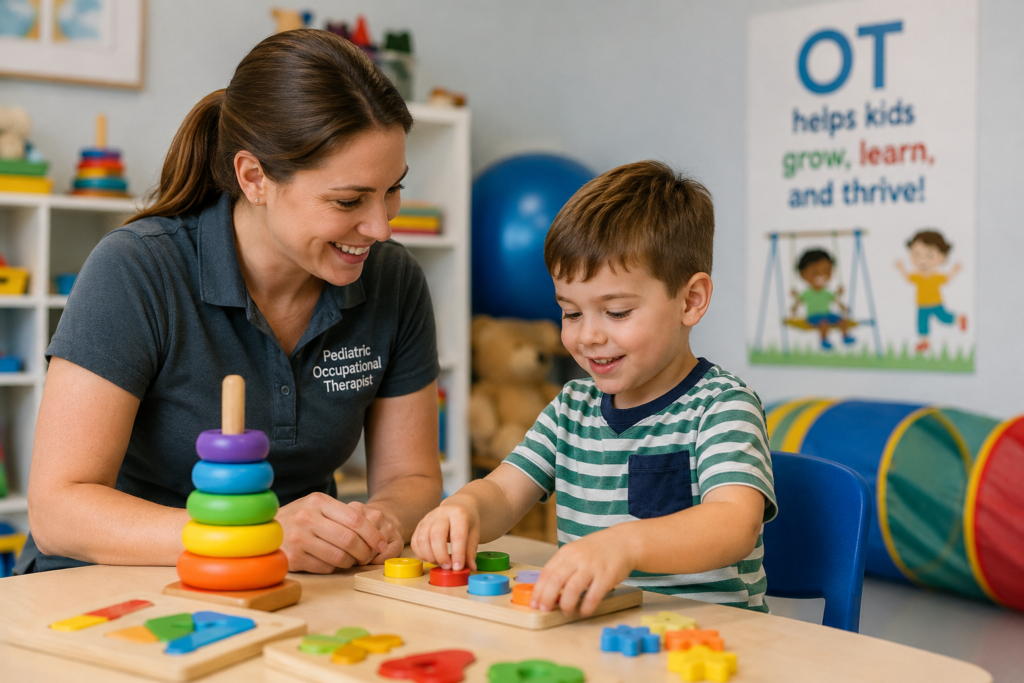
Enhancing Gross Motor and Visual Motor Skills
Gross motor skills involve larger body movements such as running, jumping, and balancing.
Visual motor skills help children coordinate what they see with how they move.
Therapists often use play-based exercises to improve:
- Balance
- Coordination
- Body awareness
- Motor planning
- Spatial awareness
Building Independence in Daily Activities
One of the primary goals of pediatric therapy services is helping children become more independent.
Therapists may work on:
- Dressing
- Eating
- Grooming
- Personal hygiene
- Organization skills
As children gain independence, their confidence often improves as well.
Supporting Social and Emotional Growth
Occupational therapists also help children develop skills needed for positive social interactions.
This may include:
- Taking turns
- Following directions
- Managing frustration
- Understanding emotions
- Building self-confidence
These developmental skills therapy strategies can improve both school and home experiences.
What Happens During Pediatric Occupational Therapy Sessions?
Many parents feel uncertain about what to expect during therapy sessions.
Occupational therapy is typically engaging, interactive, and tailored to each child’s individual needs.
Initial Evaluation and Goal Setting
The process usually begins with a comprehensive evaluation.
The therapist may assess:
- Developmental skills
- Motor abilities
- Sensory processing
- Self-care performance
- Social participation
Based on the assessment, personalized goals are created in collaboration with parents and caregivers.
Play-Based Therapy Activities
Children learn best through play.
As a result, many therapy sessions incorporate:
- Obstacle courses
- Sensory activities
- Arts and crafts
- Interactive games
- Problem-solving tasks
These activities are carefully designed to target specific developmental goals while keeping children engaged.
Collaboration With Families and Teachers
Successful therapy extends beyond the clinic.
A Pediatric Occupational Therapist often works closely with parents, caregivers, and educators to ensure consistent support across environments.
Families may receive home activities and strategies that reinforce skills learned during therapy sessions.
Choosing the Right Pediatric Occupational Therapist for Your Child
Selecting the right therapist is an important step in your child’s developmental journey.
Look for Proper Credentials
Parents should verify that therapists are:
- Licensed occupational therapists
- Experienced in pediatric care
- Trained in evidence-based treatment approaches
Specialized certifications in sensory integration or developmental therapies may also be beneficial.
Ask Important Questions
Before beginning therapy, consider asking:
- What experience do you have with children similar to mine?
- How do you develop treatment goals?
- How is progress measured?
- How can parents participate in therapy?
Clear communication helps build trust and ensures everyone works toward the same objectives.
Focus on Individualized Care
Every child has unique strengths and challenges.
The most effective therapists create personalized treatment plans that address the child’s specific developmental needs rather than using a one-size-fits-all approach.
Individualized care often leads to stronger engagement and better outcomes over time.
Conclusion
A pediatric occupational therapist helps children develop the essential skills needed to succeed at home, school, and in everyday life. From improving motor coordination and sensory processing to building independence and confidence, occupational therapy plays a vital role in supporting healthy child development.
Early intervention can make a meaningful difference when developmental challenges begin to affect daily activities. With the right guidance, personalized support, and family involvement, children can strengthen their abilities, overcome obstacles, and reach their full potential with confidence. Resources and support from ROC OTX can also help families better understand pediatric occupational therapy and make informed decisions about their child’s developmental needs.
FAQs
A pediatric occupational therapist helps children develop skills needed for daily activities, including dressing, eating, writing, playing, learning, and social interaction.
Children who experience difficulties with motor skills, sensory processing, attention, self-care tasks, or developmental milestones may benefit from occupational therapy.
Occupational therapy can begin during infancy if developmental concerns are identified. Early intervention often produces the best outcomes.
The length of therapy varies depending on the child’s needs, goals, and progress. Some children attend for a few months, while others benefit from longer-term support.
Occupational therapy focuses on helping children perform daily activities and develop functional life skills, while physical therapy primarily addresses movement, strength, balance, and mobility.