
Some children cover their ears when a vacuum cleaner starts. Others become distressed by school bells, fireworks, or even the sound of a hand dryer in a public restroom. While these reactions may seem unusual, they can be signs that your child experiences the world differently.
For many families, understanding Sensory Processing Disorder can provide answers to these everyday challenges. Children with sensory differences are not being difficult or overly sensitive. Their brains may simply process sounds in a way that makes ordinary noises feel overwhelming or even painful.
In this guide, you’ll learn why certain sounds trigger strong reactions, how to recognize common symptoms, and practical ways to support your child at home, school, and in public settings.
Why Everyday Sounds Can Feel Overwhelming?
Imagine hearing every conversation in a crowded room at full volume while trying to focus on one person speaking. For many children with Sensory Processing Disorder, this is similar to what daily life can feel like.
Everyday sounds that most people barely notice may become intense, distracting, or frightening. A school cafeteria, birthday party, or shopping mall can quickly become too much to handle.
This article will help you understand:
- Why Sensory Processing Disorder can make children extremely sensitive to noise.
- How to recognize common signs of sensory sensitivities in children.
- Practical ways parents can reduce sensory overload and help children feel more comfortable.
Understanding these differences is the first step toward creating an environment where your child feels safe and supported.
What Is Sensory Processing Disorder?
Sensory Processing Disorder (SPD) is a condition in which the brain has difficulty receiving, organizing, and responding to information from the senses.
Our senses constantly send messages to the brain about what we see, hear, touch, smell, taste, and how our body moves. Most people naturally organize this information without thinking about it.
For children with SPD, this process doesn’t always work smoothly.
Some children become overly sensitive to sensory input, while others may not notice enough stimulation and actively seek it out. Every child experiences sensory challenges differently.
SPD may affect one or several senses, including:
- Hearing
- Touch
- Vision
- Taste
- Smell
- Balance and movement
- Body awareness
When hearing is affected, children may experience significant auditory sensitivity, making common sounds feel startling, painful, or impossible to ignore.
Although SPD is not currently recognized as a standalone diagnosis in the DSM-5, many healthcare professionals and occupational therapists identify and treat sensory processing challenges because they can significantly affect daily life.
Why Do Children With Sensory Processing Disorder Hate Loud Noises?
Children with Sensory Processing Disorder often experience heightened auditory sensitivity. Their brains may struggle to filter background sounds or regulate how intensely they perceive noise.
As a result, sounds that seem perfectly normal to others can feel extremely loud or even threatening.
Common sound triggers include:
- Vacuum cleaners
- Hair dryers
- Hand dryers
- School bells
- Fire alarms
- Fireworks
- Blenders
- Crowded shopping centers
- Sporting events
- Birthday parties
When exposed to these sounds, children may experience sensory overload, where the brain receives more sensory information than it can comfortably process.
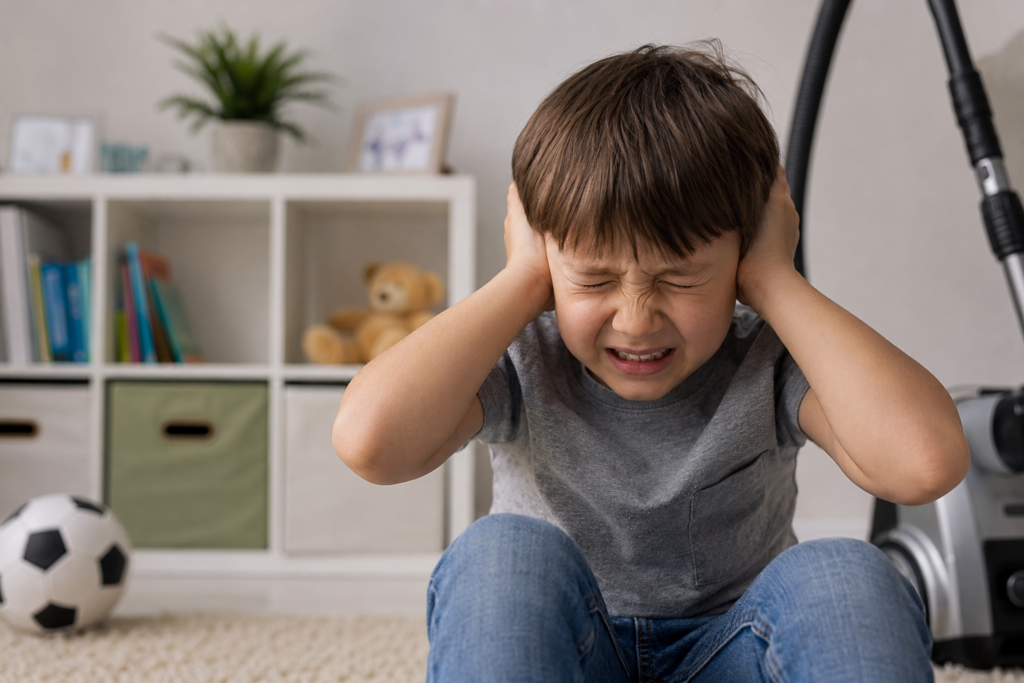
During sensory overload, a child may:
- Cover their ears
- Cry suddenly
- Become anxious or fearful
- Run away from the noise
- Refuse to enter certain environments
- Have a meltdown
- Freeze or shut down
- Become irritable or aggressive
These reactions are not intentional misbehavior. They are genuine responses to overwhelming sensory experiences.
Recognizing these triggers helps parents respond with empathy instead of frustration.
Signs Your Child May Have Sensory Processing Disorder
Every child occasionally dislikes loud noises, but persistent or extreme reactions may suggest sensory processing difficulties.
Some common signs include:
- Frequently covering their ears
- Avoiding noisy places
- Becoming upset during birthday parties or school assemblies
- Crying when household appliances are used
- Difficulty concentrating in noisy classrooms
- Strong reactions to sudden sounds
- Trouble sleeping after noisy environments
Many children also experience additional sensory sensitivities in children beyond hearing.
These may include:
- Disliking certain clothing textures
- Refusing specific foods because of texture
- Avoiding messy play
- Seeking constant movement
- Being bothered by bright lights
- Sensitivity to strong smells
If these behaviors regularly interfere with daily routines, school participation, friendships, or family activities, it may be time to seek a professional evaluation.
Early identification can help children receive appropriate support before challenges become more disruptive.
How Parents Can Help a Child With Sensory Processing Disorder?
Supporting a child with sensory challenges starts with understanding their individual needs.
Small changes can often make a big difference.
Create sensory-friendly environments
Reduce unnecessary background noise whenever possible.
This may include:
- Turning off televisions when not in use
- Using quiet appliances when available
- Creating a calm space where your child can take breaks
- Giving a warning before loud sounds occur
Prepare for challenging situations
If you know a noisy event is coming, prepare your child ahead of time.
Helpful strategies include:
- Explaining what to expect
- Bringing noise-reducing headphones
- Allowing breaks outside crowded spaces
- Arriving early before the crowds build
Teach calming techniques
Simple calming strategies may include:
- Deep breathing
- Squeezing a stress ball
- Listening to calming music
- Practicing grounding exercises
- Using comforting sensory tools
Consider occupational therapy
Many children benefit from occupational therapy for sensory processing.
Occupational therapists evaluate how sensory challenges affect everyday life and create personalized treatment plans. They often use sensory integration techniques that gradually help children process sensory information more effectively.
These interventions can improve confidence, emotional regulation, participation in school, and independence in daily activities.
When to Seek Professional Support
While occasional sound sensitivity is common, persistent sensory challenges deserve professional attention.
Consider seeking help if your child:
- Regularly avoids school or social activities because of noise
- Experiences frequent meltdowns triggered by sounds
- Struggles to participate in family outings
- Shows ongoing distress in everyday environments
- Has difficulty learning because of sensory distractions
Healthcare providers may recommend evaluations by pediatricians, psychologists, developmental specialists, or occupational therapists experienced in sensory differences.
These professionals assess how sensory challenges affect your child’s daily functioning and recommend individualized interventions.
Early support often leads to better outcomes by helping children develop coping strategies before difficulties become deeply ingrained.
Remember that every child is unique. Treatment plans should always be tailored to their individual strengths, challenges, and developmental needs.
Conclusion
For children with Sensory Processing Disorder, everyday sounds can feel far more intense than most people realize. What appears to be an overreaction is often the result of genuine sensory differences that make ordinary environments overwhelming.
Understanding your child’s sensory needs allows you to respond with patience, empathy, and practical support. Small environmental adjustments, consistent routines, and professional guidance can make daily experiences much more manageable.
With the right strategies, encouragement, and personalized care, children with sensory sensitivities can build confidence, participate more comfortably in school and social activities, and continue to thrive.
FAQs
Sensory Processing Disorder is a condition in which the brain has difficulty organizing and responding appropriately to sensory information such as sound, touch, movement, smell, taste, and vision. This can make everyday experiences feel overwhelming or confusing for some children.
Children with SPD may experience increased auditory sensitivity because their brains process sounds differently. Everyday noises like school bells, vacuum cleaners, or fireworks can feel much louder and more distressing than they do for others.
Many children benefit from occupational therapy, particularly sensory integration techniques. Therapy helps children develop coping strategies, improve sensory regulation, and participate more comfortably in everyday activities.
Sensory processing challenges are common among children with autism, but SPD can also occur independently. A healthcare professional can evaluate your child’s symptoms and determine the most appropriate diagnosis and treatment plan.
You should consider seeking professional support if sensory sensitivities consistently interfere with your child’s school performance, daily routines, social interactions, emotional well-being, or family life. Early intervention often leads to better long-term outcomes.